
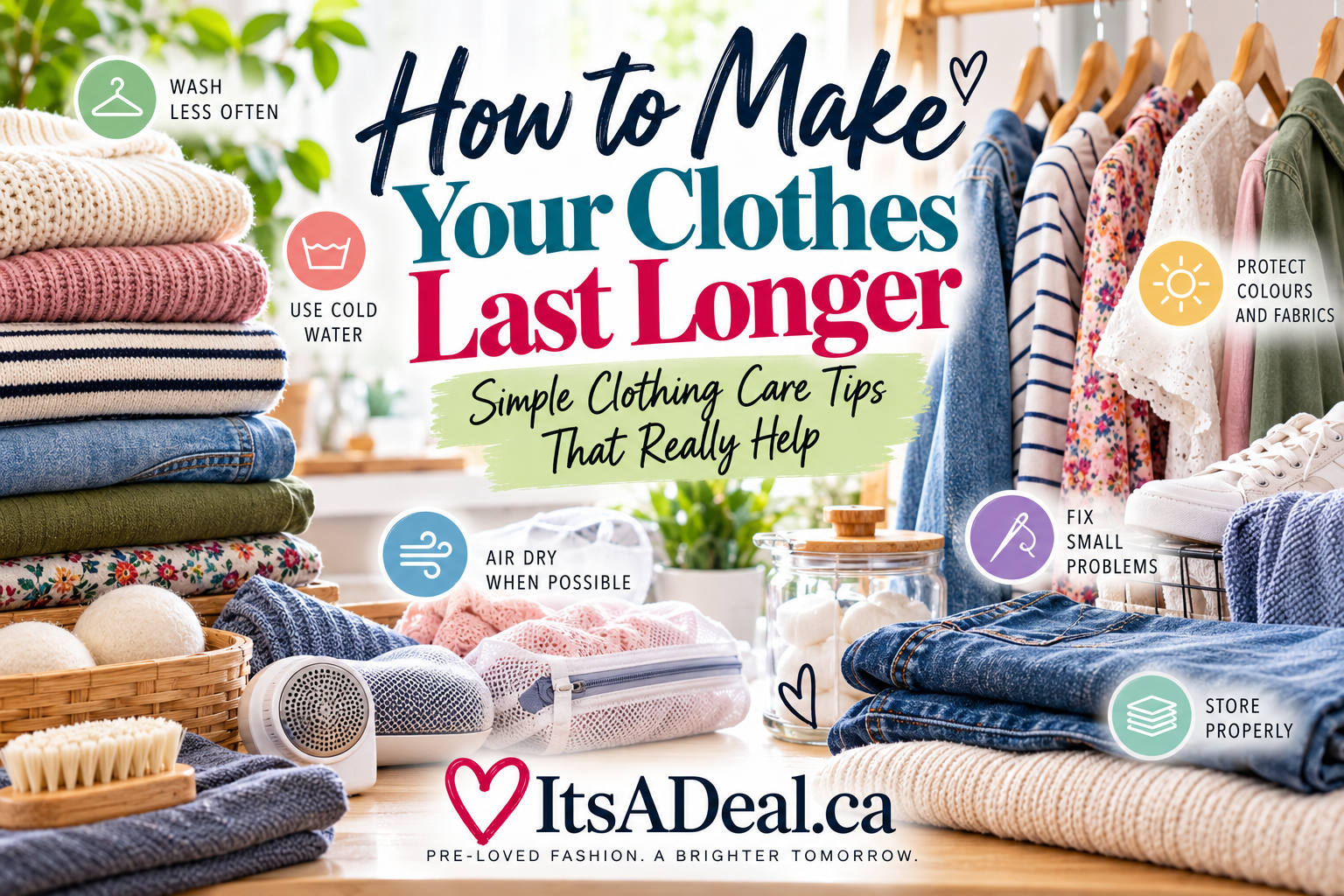
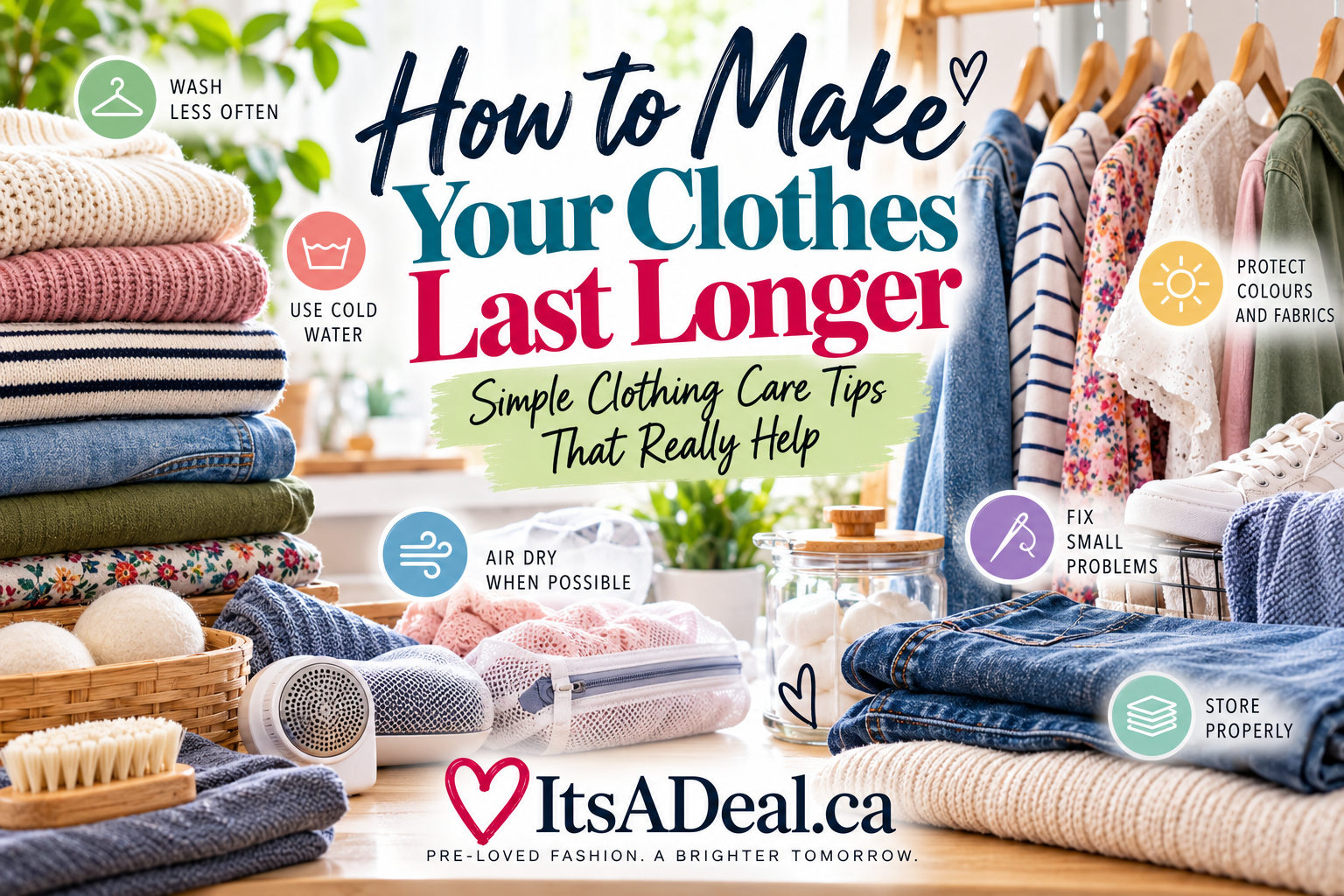
We spend a lot of time thinking about what clothes to buy, but what happens after we bring them home can make an enormous difference in how long they last.
Whether you bought something brand new, found it at a thrift store or have owned it for years, good clothing care can help prevent fading, shrinking, stretching and unnecessary wear.
And the good news?
You don't need an elaborate laundry routine.
A few simple changes can help your favourite clothes stay in your closet much longer.
1. Read the Care Label Before You Wash
This sounds obvious, but it's probably the most important tip on the list.
Different fabrics react very differently to water, heat and agitation.
Before washing something for the first time, check the care label. Pay particular attention to garments made from wool, silk, rayon, linen or anything with delicate embellishments.
And if the label says Dry Clean Only, don't assume the manufacturer is simply being overly cautious. Sometimes the fabric itself may be washable while the dyes, lining, buttons, trim or construction are not.
When in doubt, protect the garment.
2. You Probably Don't Need to Wash Everything After One Wear
Not every piece of clothing needs to go straight into the laundry hamper after being worn once.
Unless something is dirty, stained, sweaty or worn directly against the body, it may simply need to be aired out before being worn again.
Jeans, sweaters, jackets and some outer layers can often go longer between washes than T-shirts, underwear and other clothing worn directly against your skin.
Every trip through the washer and dryer exposes clothing to water, detergent, friction and heat.
Washing when necessary rather than automatically can reduce that wear.
3. Use Cold Water When It's Appropriate
For everyday laundry that isn't heavily soiled, cold water is often perfectly adequate when the garment's care instructions allow it.
Cold washing can be gentler on many fabrics and colours while also using considerably less energy than heating water for every load.
There are exceptions, of course.
Certain stains, heavily soiled items and hygiene situations may call for warmer temperatures.
That's another reason the care label should always win over a one-size-fits-all laundry rule.
4. Turn Clothes Inside Out
This is such a simple habit.
Before washing jeans, dark clothing, graphic T-shirts and other garments where you want to protect the outer surface, turn them inside out.
The inside of the garment then takes more of the friction from rubbing against other clothes during the wash.
It's especially useful for printed T-shirts because the graphic isn't constantly rubbing directly against everything else in the machine.
Zip zippers, fasten hooks when appropriate and empty the pockets while you're at it.
That forgotten tissue in a pocket can make you regret laundry day very quickly!
5. Don't Overload the Washing Machine
Stuffing one more sweater into an already packed washer might save you a load, but your clothing still needs room to move.
An overloaded machine can make it harder for water and detergent to circulate effectively.
At the same time, there's no need to run the washer for two shirts.
Aim for sensible, properly sized loads and follow your machine manufacturer's recommendations.
6. More Detergent Doesn't Mean Cleaner Clothes
It's tempting to think that if a little detergent cleans clothes, more detergent must clean them better.
Not necessarily.
Use the amount recommended for your detergent, washer, load size and water conditions.
Too much detergent can be difficult to rinse completely from fabric and may leave clothing feeling stiff or coated.
When it comes to laundry detergent, more isn't automatically better.
7. Treat Stains Sooner Rather Than Later
The longer a stain sits, the more difficult it may become to remove.
When something spills, check the garment's care instructions and treat the stain as soon as reasonably possible with a method appropriate for the fabric and the type of stain.
And here's an important one:
Don't put a stained garment into the dryer until you're satisfied the stain is gone.
Heat can make some stains considerably harder to remove.
If you're dealing with an unfamiliar fabric or stain remover, test a hidden area first.
8. Give the Dryer a Break
Dryers are wonderfully convenient, but heat and tumbling can be tough on some clothing.
When practical and permitted by the care label, consider air-drying garments that are particularly vulnerable to shrinking, fading, stretching or damage from heat.
Even if you don't want clothes hanging around your house all week, you don't have to air-dry everything.
Start with the pieces you most want to protect.
Delicate tops, bras, leggings, graphic tees and favourite jeans are good candidates when their care instructions allow it.
9. Dry Sweaters Flat
This deserves its own rule.
A wet knitted sweater can become surprisingly heavy.
Hang it from a clothes hanger while it's wet and gravity can pull the garment downward, stretching the body and leaving bumps at the shoulders.
For sweaters and many other knits, gently reshape the garment and dry it flat according to its care instructions.
The same idea applies to storage.
Fold your knits rather than hanging heavy sweaters for long periods.
Your sweater shouldn't come out of the closet three inches longer than when it went in.
10. Don't Panic About Pilling
Those little fuzzy balls that appear on sweaters don't necessarily mean the garment is ruined or poor quality.
Pilling is caused largely by friction as fibres rub during wear.
A fabric comb or fabric shaver can often remove pills and make an older sweater look dramatically better.
The key is being gentle.
Don't aggressively pull pills from delicate knitwear because you may damage the fibres or create a snag.
Sometimes five minutes of maintenance is all an older sweater needs.
11. Take Care of Stretch Fabrics
Leggings, athletic clothing and garments containing elastane or spandex rely on elastic fibres for their shape.
Excessive heat can be hard on those fibres over time.
Follow the care label and avoid unnecessary high heat when washing or drying stretch garments.
And while fabric softener isn't universally bad for clothing, it isn't appropriate for every fabric. Some performance and moisture-wicking garments specifically recommend avoiding it.
Check the label rather than automatically adding it to every load.
12. Store Clothes Properly
How clothing spends the months when you're not wearing it matters too.
Make sure seasonal clothing is clean and completely dry before storing it.
Fold heavy knits. Use supportive hangers for garments that should be hung. Avoid cramming clothing so tightly into a closet that everything is permanently crushed.
And don't forget to check stored clothing occasionally.
A small problem discovered early is much easier to deal with than one discovered six months later.
13. Learn a Few Tiny Repairs
A missing button doesn't mean a shirt has reached the end of its life.
Neither does a loose hem, tiny seam opening or small snag.
Learning a few basic repairs — sewing on a button, closing a simple seam or securing a loose hem — can keep perfectly wearable clothing in rotation for years longer.
For repairs beyond your comfort level, a tailor may be able to save a garment for far less than the cost of replacing it.
14. Don't Iron Everything Just Because It's Wrinkled
Heat is another form of stress on fabric.
If a garment only has a few wrinkles, hanging it in a steamy bathroom or using an appropriate garment steamer may sometimes be enough.
If ironing is necessary, check the care label and use the correct temperature for the fabric.
More heat isn't better.
15. Buy Clothes Worth Taking Care Of
Making clothes last longer starts before laundry day.
When you're shopping — whether new or secondhand — look at the fabric, seams, stitching, buttons, zippers and overall construction.
You don't necessarily need expensive clothing.
A well-made $10 secondhand pair of jeans that you wear for years can be a much better purchase than something you buy new, wear twice and forget about.
At ItsADeal.ca, that's one of the things we love about secondhand fashion.
A garment may already have had one owner — but that doesn't mean it's anywhere near the end of its useful life.
The Goal Isn't Perfect Clothing
Clothes are meant to be worn.
Eventually colours soften. Denim fades. Sweaters may pill. Shoes develop creases.
Those signs don't automatically mean something needs replacing.
Good clothing care isn't about keeping every garment looking brand new forever. It's about helping the things you already own stay wearable, useful and loved for as long as possible.
Wash thoughtfully. Use less heat when you can. Fix the little things. Store clothing properly.
And before replacing something, ask yourself:
Does this really need replacing — or does it just need a little care?
Sometimes the most sustainable piece of clothing is simply the one that's already hanging in your closet.
Happy thrifting — and take care of your clothes!
From ItsADeal.ca — affordable fashion, secondhand finds and unique pieces waiting for their next chapter.